Who is the captain of the Germany football team? Meet the leader of the Die Mannschaft
The German national team remains one of the top sides in international football and is currently ranked 10th in the FIFA rankings. Germany also possesses a rapidly rejuvenated squad filled with talented players across every area of the pitch. In leading this new generation of footballers, the captain plays an extremely important role. goaloomobi.com answers the question: Who is the captain of the Germany football team?
Who is the captain of the Germany football team?
As of May 2026, the captain of the German national team is Joshua Kimmich, the Bayern Munich player who currently operates mainly as a right-back and midfielder. Kimmich officially took over the captaincy after Euro 2024, following İlkay Gündoğan’s retirement from international football. Other experienced players previously considered for the role, such as Manuel Neuer and Thomas Müller, are also no longer part of the national team setup.
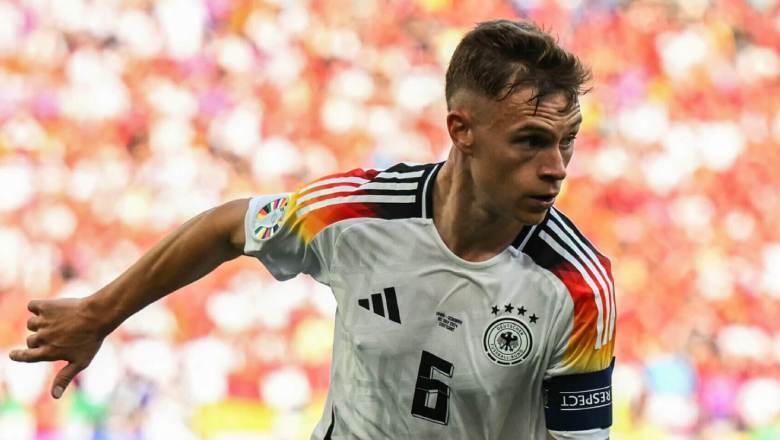
Alongside Joshua Kimmich, Antonio Rüdiger and Kai Havertz have been appointed as the official vice-captains by coach Julian Nagelsmann. Marc-André ter Stegen, Niclas Füllkrug, Pascal Groß, and Jonathan Tah are also among the senior figures considered part of the leadership group.
The upcoming 2026 FIFA World Cup will be Kimmich’s second major tournament as captain of Germany, following his leadership role during the 2025 UEFA Nations League campaign.
Who is Joshua Kimmich? When did he become Germany’s captain?
Joshua Kimmich was born in 1995 and currently plays for Bayern Munich. He is capable of operating both as a defensive midfielder and as a right-back. Kimmich is widely viewed as the successor to legendary German captain Philipp Lahm, who famously led Germany to victory at the 2014 FIFA World Cup.
One of Kimmich’s greatest strengths is his passing ability. His passing accuracy regularly reaches around 90-92%, and he is capable of producing long diagonal passes, precise through balls, and dangerous deliveries over defensive lines with remarkable consistency. In addition, he consistently ranks among the leaders in chance creation in both the Bundesliga and the UEFA Champions League.
Although Kimmich is not physically dominant at around 1.77 meters tall, he compensates with excellent positioning, anticipation, and tactical intelligence. He is highly effective at intercepting passes and recovering possession. Kimmich is also usually responsible for taking corners and free kicks for both Bayern Munich and Germany, with his deliveries known for their difficult spin and trajectory.
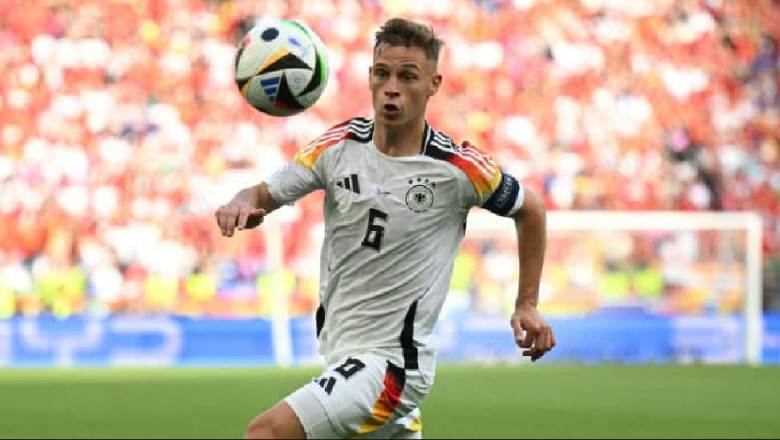
Joshua Kimmich made his debut for Germany in 2016 during a friendly match against Slovakia. He was quickly selected for the UEFA Euro 2016 squad, where he impressed despite being only 21 years old and was included in the Team of the Tournament.
Currently, with more than 100 appearances for Germany, Kimmich ranks among the players with the most caps in the nation’s history, alongside legendary names such as Jürgen Klinsmann. He continues to close in on the records of Philipp Lahm and Toni Kroos.
Kimmich’s Position and Role in the German National Team
For Germany, Kimmich usually starts as a right-back, but his role is far more complex than a traditional full-back. When Germany controls possession, he frequently moves into central areas to help dictate the tempo like a midfielder. This tactical adjustment allows Germany to create numerical superiority in midfield while maximizing Kimmich’s passing and playmaking abilities.
As captain, Kimmich acts as Julian Nagelsmann’s on-field leader. He constantly organizes teammates, adjusts the defensive shape, and helps maintain tactical discipline throughout matches. His playing style is heavily based on intensity and stamina, often covering more than 11 kilometers per game.
In many matches, Kimmich is also the first player to initiate pressing high up the pitch in order to recover possession quickly. His tactical awareness and work ethic make him one of the most influential players in Germany’s system.
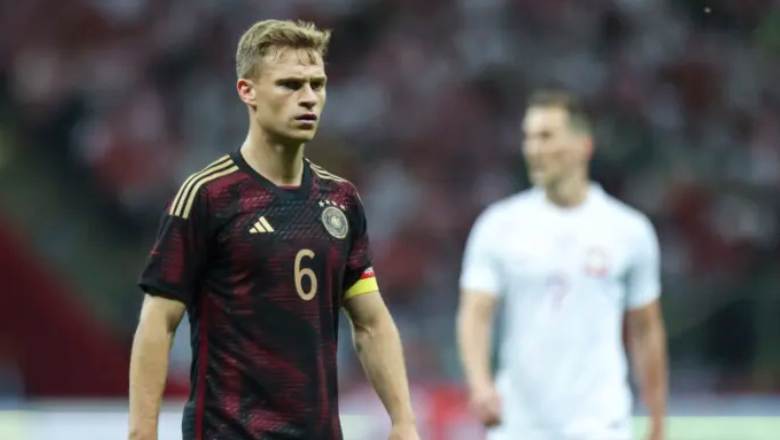
In reality, Kimmich’s preferred position is central midfield. However, Nagelsmann has often preferred to use him at right-back because Germany currently lacks another complete player in that role. Playing Kimmich on the right also gives younger midfielders such as Aleksandar Pavlović or Robert Andrich greater freedom to operate centrally, while Kimmich can still influence play by drifting inside.
Why was Joshua Kimmich chosen as Germany’s captain?
Following the international retirements of key veterans such as İlkay Gündoğan, Manuel Neuer, Toni Kroos, and Thomas Müller, Kimmich became one of the most experienced players remaining in the squad. Julian Nagelsmann described him as the “most logical successor” because he had already served as one of Germany’s vice-captains during Euro 2024.
In addition, Kimmich maintains strong relationships throughout the squad, from younger players to senior veterans. He is viewed as an important figure in preserving unity inside the dressing room, something Nagelsmann considers essential after Germany experienced internal tensions in previous international tournaments.
“For me, a captain is a representative of the team… Joshua is always full of motivation and never stops giving everything,” Nagelsmann said when officially appointing Kimmich as captain.
Goaloo Mobi has just answered the question: Who is the captain of the Germany football team?, while also reviewing Joshua Kimmich’s career and role within the German national team. To learn more about future football schedules, click on the link to our page.
The Most Popular
-
 How many Premier League games are in a season? The complete breakdown
 -
 From Flames to Origami: Ranking the most iconic Japan football jerseys in history
 -
 Is Pep Guardiola the best manager ever? The man who changed football forever
 -
 How is injury time calculated? Why matches are getting longer than ever
 -
 What team does Messi play for in 2025? Full details on his club and international career
 -
 Argentina national football team players 2026 World Cup list: Key stars and Predicted XI
 -
 Why did James Rodríguez leave Real Madrid? The rise and fall of a Galáctico dream
 -
 The €54 million catalyst: How much did Manchester United buy Bruno Fernandes?
 -
 The £75 million bargain: How much did Liverpool actually pay for Van Dijk?
 -
 Was he the best investment ever? How much did Real Madrid pay for Ronaldo?