
How many Premier League games are in a season? The complete breakdown
The Premier League runs from August to May each year, with very few breaks throughout the campaign. It is also considered one of the most physically demanding leagues in the world due to the competitiveness between clubs, where surprises frequently occur and even top teams can lose to lower-ranked opponents.
In this article, goaloomobi.com will answer the question: How many Premier League games are in a season?
How many Premier League games are in a season?
Since the 1995/96 season, the Premier League has featured 20 teams competing in a double round-robin format, meaning every club faces each opponent twice, once at home and once away. As a result, each team plays 38 league matches per season.
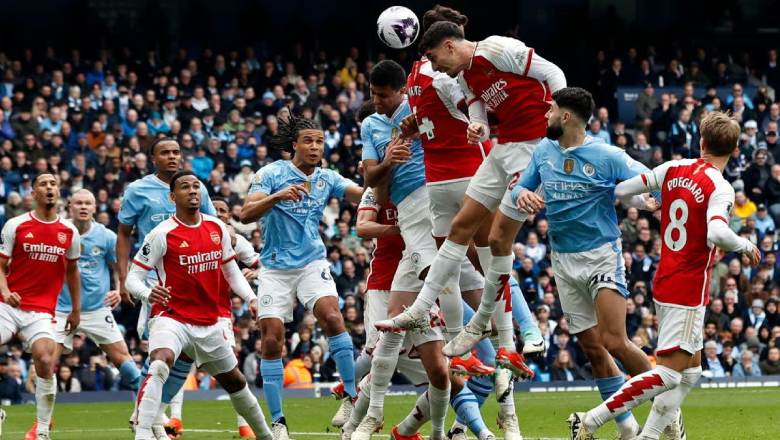
With 20 teams in the competition, the total number of matches played across an entire Premier League season is 380. Most fixtures are played on weekends, usually on Saturdays and Sundays, although some rounds are scheduled during midweek.
One of the major differences between the Premier League and many other European leagues is the lack of a traditional winter break. During the Christmas and New Year period, often referred to as the “Festive Period,” clubs can play up to three rounds of matches, totaling 30 fixtures within just 8 to 10 days.
However, beginning with the 2026/27 season, Premier League organizers have committed to ensuring that no club is required to play two matches within a period of fewer than 60 hours.
Facts about Premier League matches
1. How the fixtures are created
With such a large number of matches, organizing the fixture schedule is an extremely complicated task. The process is handled by advanced computer systems and carefully reviewed to avoid conflicts.
Before the schedule is finalized, clubs are grouped geographically to reduce logistical problems. Major rivalries such as Arsenal vs Tottenham Hotspur, Liverpool vs Everton, and Manchester City vs Manchester United are never scheduled with both clubs playing at home in the same round. This helps reduce pressure on local police and transport systems.
Each season is divided into several scheduling blocks. Within each block, a club will usually play either three home matches and two away matches, or the reverse. There are also strict rules regarding fairness. For example, a team cannot play three consecutive home or away matches. If a club begins the season with a home game, it is generally scheduled to play away in the final round.

Boxing Day fixtures on December 26th are often arranged between clubs located near each other, particularly in London, to reduce travel demands for supporters during the busy holiday period. Organizers must also coordinate schedules around domestic cup competitions and FIFA international breaks.
After the computer-generated draft is completed, usually around March, the schedule goes through multiple review stages. Security authorities examine the fixtures for potential public safety concerns, clubs can raise objections to major scheduling issues, and broadcasters select high-profile matches for prime-time television coverage.
2. The issue of match kick-off times
Premier League matches are played at different times throughout the week. Traditionally, one of the earliest fixtures takes place at 12:30 pm on Saturday. This time slot is often criticized by managers because clubs involved in European competitions may have less than 60 hours to recover after playing on Wednesday nights.
In England, matches played at 3 pm on Saturdays are generally not broadcast live on television. This rule exists to protect attendance figures in lower divisions of the English Football League system. Organizers believe that if high-profile matches involving clubs such as Manchester United or Arsenal were shown live at that time, many fans would choose to stay home instead of attending local matches.
Big clubs are usually selected for prime-time television slots because they attract larger audiences. The amount of broadcasting revenue each club receives partly depends on the number of televised matches. Leading teams often appear live between 25 and 30 times per season. Each televised fixture provides an additional base payment of around €1.15 million, which is one reason why top clubs generate significantly more revenue than smaller teams.
3. The actual number of matches played by players
Although every club plays 38 league matches, it is rare for an outfield player to complete all 38 games without missing a single minute. Goalkeepers are more likely to achieve this milestone. Defenders such as James Tarkowski and Max Kilman are among the few outfield players capable of playing every match in a season.

For players competing with top-six clubs involved in multiple tournaments, rotation is very common. Even star players often feature in only 30 to 33 Premier League matches each season. Coaches regularly rest key players after exhausting international trips or before important cup fixtures in order to reduce the risk of injuries.
4. Some information about Premier League broadcasting rights
To watch Premier League matches legally in England, supporters usually need subscriptions to several services, including Sky Sports, TNT Sports, and sometimes Amazon Prime Video. The total monthly cost can range from around €80 to €115.
Because subscription prices are expensive, many English fans choose to watch football in pubs. Pubs themselves must pay very high commercial broadcasting fees, often reaching tens of thousands of euros per year depending on the size of the venue, in order to legally show matches to customers.
Goaloo Mobi has answered the question: How many Premier League games are in a season? We have also explored several interesting facts about football scheduling and broadcasting in England. To learn more about upcoming football predictions and fixtures, please visit our website.
The Most Popular
-
 From Flames to Origami: Ranking the most iconic Japan football jerseys in history
 -
 Who is the captain of the Germany football team? Meet the leader of the Die Mannschaft
 -
 Is Pep Guardiola the best manager ever? The man who changed football forever
 -
 How is injury time calculated? Why matches are getting longer than ever
 -
 What team does Messi play for in 2025? Full details on his club and international career
 -
 Argentina national football team players 2026 World Cup list: Key stars and Predicted XI
 -
 Why did James Rodríguez leave Real Madrid? The rise and fall of a Galáctico dream
 -
 The €54 million catalyst: How much did Manchester United buy Bruno Fernandes?
 -
 The £75 million bargain: How much did Liverpool actually pay for Van Dijk?
 -
 Was he the best investment ever? How much did Real Madrid pay for Ronaldo?