
Five iconic Australian players in Premier League history: The legends from Down Under
Australian football is considered one of the stronger forces in Asia, especially after joining the AFC in 2006. However, it still faces stiff competition from football powerhouses in Europe and South America. Despite this, many Australian players have successfully played at the highest level in Europe, particularly in England. In this article, goaloomobi.com reviews five iconic Australian players in Premier League history.
Five iconic Australian players in Premier League history
This list is not intended as a ranking, and the players featured are based on the author’s personal opinion.
5. Mark Bosnich
Mark Bosnich is widely regarded as one of the most talented yet controversial goalkeepers in Premier League history. Over the course of his career, he made 206 appearances, mainly representing Aston Villa, where he built his reputation as a top-class shot-stopper. He also had spells at Manchester United and Chelsea, two of the biggest clubs in England.
Bosnich was particularly known for his lightning-fast reflexes and ability to make difficult saves look routine. One of his most memorable moments came in 1994, when he saved three penalties in a League Cup match for Aston Villa, showcasing his mental strength and agility.
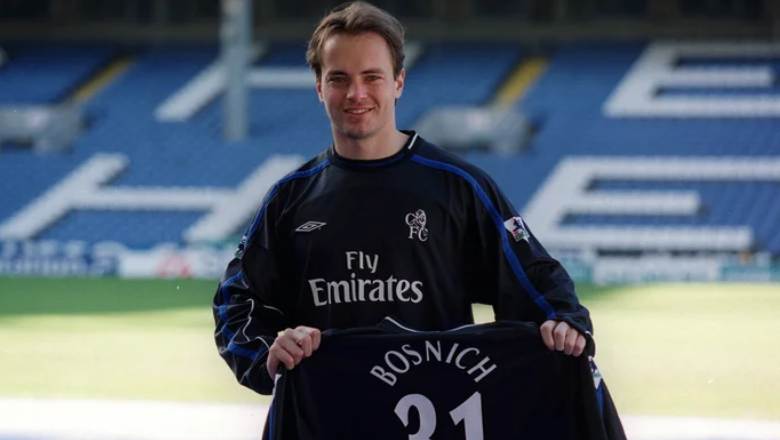
However, his career was overshadowed by off-field controversies. In 1996, he sparked outrage after performing a fascist-style salute toward Tottenham fans, which resulted in a fine and heavy criticism. Later, in 2002, while playing for Chelsea, he tested positive for cocaine. This led to a nine-month suspension and the termination of his contract, effectively ending his career at the highest level in England.
4. Mark Schwarzer
Mark Schwarzer is the most capped Australian player in Premier League history, with an incredible 514 appearances. He also became the first non-British player to reach the 500-game milestone in the competition. Schwarzer played for several English clubs, including Middlesbrough (1997-2008), Fulham (2008-2013), Chelsea (2013-2015), and Leicester City (2015-2016), maintaining a high level of performance well into his late 30s.
Interestingly, Schwarzer was part of two consecutive Premier League title-winning squads with Chelsea (2014/15) and Leicester City (2015/16). However, he did not play any minutes in those seasons, meaning he was not automatically awarded a winner’s medal. Known for his calm demeanor, excellent positioning, and strong penalty-saving ability, Schwarzer was a dependable presence between the posts. Standing at 1.94 meters tall, he commanded his defense effectively and was respected as a leader on and off the pitch.
3. Harry Kewell
Harry Kewell was one of the most naturally gifted Australian players to play in the Premier League. He began his English career with Leeds United, where he scored 45 Premier League goals and won the PFA Young Player of the Year award in 2000. Kewell played a key role in Leeds’ run to the UEFA Champions League semi-finals in 2001, forming part of an exciting and dynamic team. His pace, dribbling ability, and versatility allowed him to operate effectively across multiple attacking positions on the left side.
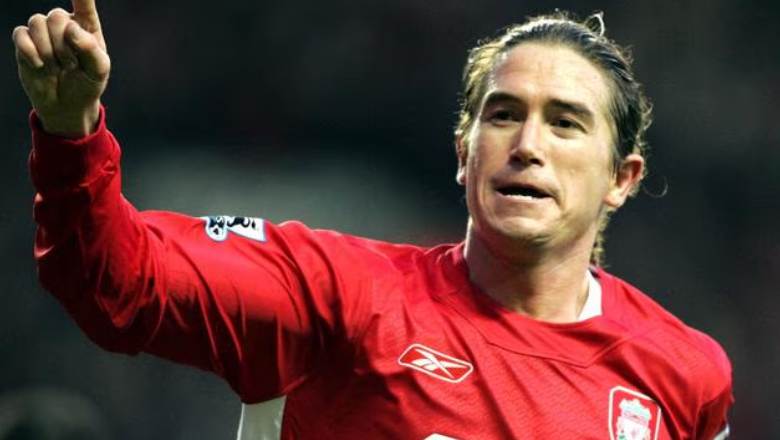
In 2003, Kewell joined Liverpool, but his time at Anfield was hampered by injuries. Over five seasons, he managed only 12 goals in 93 Premier League appearances. Despite this, he remained an important squad member under Rafael Benítez due to his tactical intelligence and experience. Notably, Kewell became the first Australian player to win the UEFA Champions League in 2005, even though he was forced off early in the final due to injury.
2. Tim Cahill
Tim Cahill is perhaps the most recognizable Australian player in Premier League history, especially for his time at Everton. Known for his extraordinary heading ability, Cahill consistently outperformed taller defenders thanks to his timing, leap, and determination. Despite not being physically imposing, he scored 56 Premier League goals, many of them in crucial matches.
Signed from Millwall in 2004 for just £1.5 million, Cahill quickly became one of Everton’s greatest signings. He had a knack for scoring in big games, particularly in Merseyside derbies against Liverpool, where he often delivered decisive moments. His passion and work ethic made him a fan favorite. In 2006, Cahill became the first Everton player in 18 years to be nominated for the Ballon d’Or, highlighting his impact during that period.
1. Mark Viduka
Mark Viduka holds the record as the highest-scoring Australian in Premier League history, with 92 goals in 240 matches. After joining Leeds United from Celtic, he quickly established himself as a dominant striker, known for his strength, technique, and composure in front of goal. One of his most iconic performances came on November 4, 2000, when he scored all four goals in Leeds’ incredible 4-3 comeback victory against Liverpool. This remains one of the greatest individual displays in Premier League history.
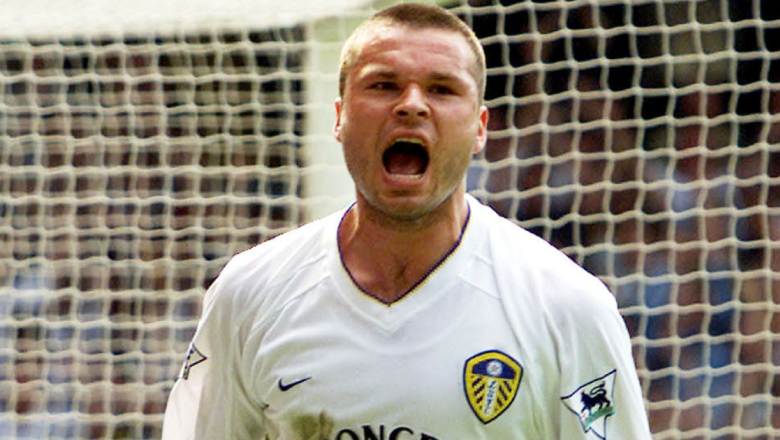
Following Leeds’ relegation due to financial difficulties, Viduka continued to prove his quality at Middlesbrough (2004-2007) and Newcastle United (2007-2009). Despite his success, he chose a quiet life after retirement and now runs a café in Zagreb, Croatia, away from the spotlight.
Goaloo Mobi has reviewed five iconic Australian players in Premier League history. If you want to learn more about upcoming football predictions, please click on the link to our page.
The Most Popular
-
 How many Premier League games are in a season? The complete breakdown
 -
 From Flames to Origami: Ranking the most iconic Japan football jerseys in history
 -
 Who is the captain of the Germany football team? Meet the leader of the Die Mannschaft
 -
 Is Pep Guardiola the best manager ever? The man who changed football forever
 -
 How is injury time calculated? Why matches are getting longer than ever
 -
 What team does Messi play for in 2025? Full details on his club and international career
 -
 Argentina national football team players 2026 World Cup list: Key stars and Predicted XI
 -
 Why did James Rodríguez leave Real Madrid? The rise and fall of a Galáctico dream
 -
 The €54 million catalyst: How much did Manchester United buy Bruno Fernandes?
 -
 The £75 million bargain: How much did Liverpool actually pay for Van Dijk?