
How many countries call football soccer? Exploring the world’s different names
For a very long time, football was called “football,” a combination of “foot” (referring to the use of the feet) and “ball.” However, in many places, football is called soccer, while “football” is used to refer to other sports. goaloomobi.com will answer the question: how many countries call football “soccer”?
How many countries call football soccer?
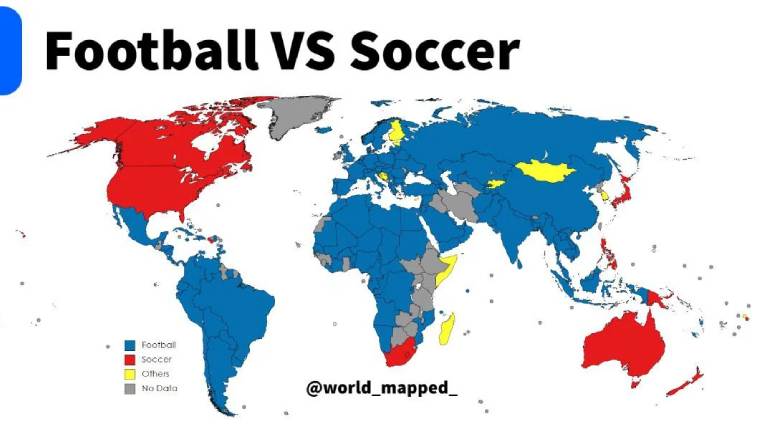
Statistically, countries that call football “soccer” include the United States, Canada, Australia, South Africa, New Zealand, and parts of Ireland. The United States is the most famous for calling football “soccer,” even having its own league called “Major League Soccer.” Meanwhile, the word “football” refers to American football.

In fact, not only the US, but many countries also use the term “soccer.” These countries are either influenced by American culture, or they already have a sport called “football.” The term is used relatively widely but also causes much debate about the standardization of the name, especially since both “football” and “soccer” are English words.
The history of “football”
The word “football” appeared in English around the 14th century. At that time, football was not a sport with unified rules as it is today, but rather a folk game (mob football) played between villages. In feudal society, the aristocracy often played horseback sports like polo.
Meanwhile, common people played games with a ball at their feet. Therefore, “football” originally meant a sport played on foot, to distinguish it from horseback sports. Although “foot” initially referred to standing on the ground, over time, using the feet to control the ball became the defining characteristic of the sport.
When and where did soccer originate?
In fact, the word “soccer,” commonly used by Americans, does not come from America but from England, the birthplace of modern football. In mid-19th-century England, “football” was a general term for many ball games. Each school had its own rules: some allowed the use of hands, others only feet. In 1863, a group of clubs met in London to unify the rules, forming the Football Association (FA). From then on, the sport officially became known as association football.
In the 1880s, students at Oxford University had an interesting linguistic habit: they liked to shorten nouns and add “-er” at the end to make them sound more informal. At that time, to distinguish it from rugby (rugger), students took the middle part of the word “association” and modified it: they shortened “association” to “assoc” and added “-er,” making it “assocer.” To make it easier to pronounce and avoid any awkward sound, the word was later shortened to “soccer.”
In the early 20th century, both “football” and “soccer” were used interchangeably in England as synonyms. When the sport was introduced to America, where American football was already very popular, Americans chose the English loanword “soccer” to refer to the sport.
After World War II, England gradually dropped the word “soccer.” However, when this name became popular in America, Americans used it so widely that the British effectively “left” the term to them.
Brian Phillips wrote a clear explanation of the origin of the word “soccer” for Slate in 2010: “It’s an abbreviation of association football. Both soccer and American football come from the same set of precursor sports, which became popular in upper-class English schools in the early 19th century and spread across the Atlantic. All these games involved advancing a ball through an opponent’s territory and scoring at the far end, but the rules varied from place to place.
“Ultimately, the version adopted as standard in the United Kingdom came to be known as association football, while another set of rules developed in the United States. Thus, Americans called their sport ‘gridiron football’ and referred to the British sport by the slang term ‘soccer,’ derived from the ‘soc’ in ‘association.’”
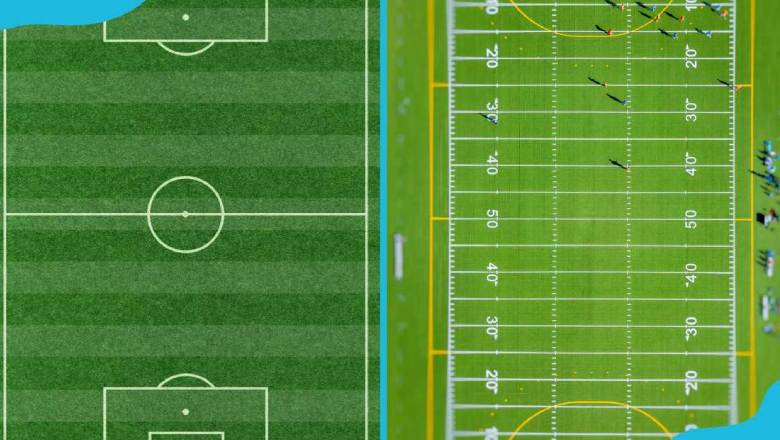
Of course, some countries heavily influenced by the US also chose the word “soccer.” Canada uses it because of Canadian football, Australia uses it to distinguish it from Australian rules football (AFL), and Ireland uses it to distinguish it from Gaelic football.
Other countries around the world still choose to use the word “football,” as well as variations of this name based on their language, such as Spain and Latin America (fútbol), Portugal and Brazil (futebol), Germany (fußball), and France (retaining the spelling “football” but pronouncing it with a French accent).
Large corporations are often very careful to avoid confusing customers. For example, Nike and Adidas often use the word “football” for global campaigns, but when running advertisements specifically for the US market, they change it to “soccer.” FIFA, the most powerful governing body in world football, keeps the “F” (football) in its name, but still recognizes federations that include the word “soccer” (such as US Soccer).
Goaloo Mobi has just answered the question: how many countries call football “soccer,” as well as reviewing the naming conventions used by different countries. To discover more of the latest football schedules, click on the link to the page.
The Most Popular
-
 How many Premier League games are in a season? The complete breakdown
 -
 From Flames to Origami: Ranking the most iconic Japan football jerseys in history
 -
 Who is the captain of the Germany football team? Meet the leader of the Die Mannschaft
 -
 Is Pep Guardiola the best manager ever? The man who changed football forever
 -
 How is injury time calculated? Why matches are getting longer than ever
 -
 What team does Messi play for in 2025? Full details on his club and international career
 -
 Argentina national football team players 2026 World Cup list: Key stars and Predicted XI
 -
 Why did James Rodríguez leave Real Madrid? The rise and fall of a Galáctico dream
 -
 The €54 million catalyst: How much did Manchester United buy Bruno Fernandes?
 -
 The £75 million bargain: How much did Liverpool actually pay for Van Dijk?